

Key Takeaways:
- Mount Rushmore took 400 men 14 years to carve, with each presidential head measuring 60 feet high—and remarkably, no workers died during construction.
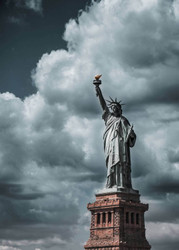
- The Statue of Liberty arrived from France in pieces by ship in 1884 and requires climbing 354 steps to reach the crown.
- George Washington helped choose the site for the White House but was the only president who never slept there.
- Yellowstone became the world's first national park in 1872 under President Ulysses S. Grant.
- The Grand Canyon Skywalk hangs 4,000 feet above the Colorado River, and the canyon itself took between three and six billion years to form.
The United States is full of fascinating landmarks that you can visit by car. Your family could take a fun road trip to visit places such as the White House in Washington, D.C., the Statue of Liberty in New York City, or Yellowstone National Park in Wyoming. If you learn some of the history involved with these landmarks, you might enjoy your trip even more. Don't forget to pack a camera so you can make a scrapbook of your car trip to see historical U.S. landmarks, too!
- Virtual Tour of Statue of Liberty: Take a virtual tour of the Statue of Liberty to learn all of the history and symbolism connected with it.
- Statue of Liberty Facts: The Statue of Liberty was given to the United States by France as a symbol of the friendship between these two countries.
- Light of Liberty: The United States received the Statue of Liberty from France on July 4, 1884. It came to the United States in pieces on a ship, and workers put it together.
- The Statue of Liberty Facts: The Statue of Liberty is just more than 305 feet high, and it weighs 225 tons.
- Statue of Liberty Facts: Walking up to the crown of the Statue of Liberty involves climbing 354 steps.
- White House Facts: George Washington worked with a city planner to choose the site for the White House in Washington, D.C.
- The White House: Fun and Interesting Facts: The White House contains six levels, 132 rooms, and 32 bathrooms. It also has a bowling alley, a swimming pool, and a jogging track.
- White House Questions and Answers: Mamie Eisenhower started the tradition of decorating the White House for Halloween in 1956.
- White House History: Teddy Roosevelt was the president who first gave the White House its name. It took eight years to build the first White House.
- White House Facts and Trivia: The only president who never slept in the White House was George Washington.
- The South Lawn: The South Lawn outside the White House has a fountain, a tennis court, a swimming pool, and big trees. This is where the helicopter lands when picking up or dropping off the president.
- 10 Fascinating Facts About the Liberty Bell: Historians can only guess about the exact reason the Liberty Bell cracked. The final crack happened in 1846, when it was ringing. From this point, the damage has prevented it from actually ringing.
- Liberty Bell Facts (PDF): The first time the Liberty Bell rang was on July 8, 1776. The original name of this bell was "the State House bell."
- The Liberty Bell: This cultural icon has had a long history and taken on rich symbolism since it was cast in the 1750s.
- The Liberty Bell as a Symbol: The Liberty Bell used to ring often. One of the most important times it rang was to call citizens to listen to the reading of the Declaration of Independence.
- Mount Rushmore Facts and Figures: Carving Mount Rushmore took 400 men 14 years to do. The work was hard and dangerous, but no one died as they worked on this carving.
- Mount Rushmore: The presidents on Mount Rushmore are George Washington, Thomas Jefferson, Theodore Roosevelt, and Abraham Lincoln.
- Mount Rushmore FAQs: George Washington's face was the first to be carved on Mount Rushmore, and it took years to finish this part of the carving.
- Mount Rushmore Facts (PDF): Mount Rushmore sits in the Black Hills of South Dakota, and it is the biggest carved mountain in the world.
- Mount Rushmore: Birth, Expansion, Preservation, and Development (PDF): Doane Robinson was the man who had the idea for Mount Rushmore. He wanted to make something that would attract people to South Dakota.
- Mount Rushmore (PDF): Each of the presidents' heads is 60 feet high and 40 feet wide. Their eyes are 11 feet wide, and their noses are 20 feet long.
- Grand Canyon Skywalk (PDF): The Grand Canyon Skywalk hangs 4,000 feet above the Colorado River, and it has glass walls to allow you to see out over the Grand Canyon.
- Seven Amazing Grand Canyon Facts (PDF): The average depth of the Grand Canyon is about a mile, but it is not the deepest canyon in the world. A canyon in the Himalayas is the deepest and longest canyon.
- Grand Canyon Facts: It took between three and six billion years for the Grand Canyon to form. Even now, it continues to change due to erosion.
- Hoover Dam Bridge: Top 10 Engineering Facts: The Hoover Dam sits on Lake Mead, and it is 726 feet high. Workers built the Hoover Dam Bridge between the years of 2005 and 2010.
- The Hoover Dam Experience (PDF): The water churning through the Hoover Dam generates electricity. If you stand in the center of the dam, you can have one foot in Arizona and the other foot in Nevada.
- The Hoover Dam: Lake Mead is the reservoir for the Hoover Dam, and workers made this lake as a part of the dam construction.
- Facts About Yellowstone National Park: Ulysses S. Grant was the president who made Yellowstone National Park a park in 1872.
- Curious About the Redwood Forest? Redwoods can grow to heights of 300 feet, but their root systems are amazingly small. The redwood roots are usually only between 6 and 12 feet deep.
- Redwood National Park: The redwood trees growing along the West Coast are native to Oregon and California.
- The Birth of the Golden Gate Bridge (PDF): Construction of the Golden Gate Bridge began in 1933 to solve transportation problems for people who had to take a ferry to get between San Francisco and Marin County.
- History of the Golden Gate Bridge: It took more than four years to build the Golden Gate Bridge. Workers drove the last spike into the bridge on April 27, 1937.
- The Golden Gate Bridge (PDF): It's hard to miss the Golden Gate Bridge when you come into the San Francisco Bay. There are six lanes on the bridge and two footpaths.
From the 354 steps up Lady Liberty's crown to the glass-floored Skywalk suspended above the Colorado River, these landmarks reward those willing to make the journey. The real magic happens in the miles between destinations—singalongs through Wyoming, gas station snacks in Nevada, kids napping while you chase the sunset. Road trips put your vehicle through its paces, and seasoned travelers know that protective car seat covers handle the inevitable trail dust, spilled drinks, and sandy shoes so you can focus on making memories instead of worrying about the mess.
FAQs
1. What's the best way to plan a road trip to see U.S. landmarks?
Start by mapping destinations that flow geographically rather than zigzagging across the country. Group nearby landmarks together—combine the Grand Canyon with Hoover Dam, or hit Mount Rushmore and Yellowstone in one western loop. Build in flexibility for unexpected discoveries and rest days. The journey between landmarks often becomes as memorable as the destinations themselves.
2. How do I keep kids entertained during long drives between landmarks?
Mix screen time with interactive games like license plate bingo or landmark scavenger hunts. Audiobooks and podcasts about upcoming destinations build excitement while educating. Plan regular stops for stretching and snacks—rest areas near scenic overlooks double as quick adventures. Comfortable backseat setups with blankets and pillows help younger travelers nap through longer stretches.
3. What should I pack for a multi-day road trip?
Beyond clothing and toiletries, bring a well-stocked cooler, emergency car kit, phone chargers, and physical maps as backup. First aid supplies, sunscreen, and refillable water bottles prove essential at outdoor landmarks. Families with kids or pets benefit from easy-clean interior protection—quality truck seat covers simplify cleanup after beach visits, hiking adventures, and roadside picnic spills.
4. Are these landmarks accessible year-round?
Most major landmarks remain open throughout the year, though seasonal conditions affect the experience. Yellowstone's roads partially close during winter, and the Grand Canyon's North Rim shuts down in colder months. Summer brings crowds but reliable weather, while shoulder seasons offer smaller crowds with unpredictable conditions. Check official park websites before finalizing travel dates.
5. How can I make my road trip more educational for children?
Research landmarks together before departing and let kids pick some destinations. Many sites offer junior ranger programs with badges and activities designed for young visitors. Encourage journaling or scrapbooking to document discoveries. Connecting classroom subjects to real-world experiences—geology at the Grand Canyon, history at Mount Rushmore—transforms entertainment into lasting education.