



Key Takeaways:
- Henry Ford transformed the automobile from a luxury item for the wealthy into an affordable necessity for everyday Americans.
- The Model T, released in 1908, became one of the best-selling cars of all time with over 15 million vehicles sold.
- Ford revolutionized manufacturing in 1913 by introducing the first automotive assembly line, dramatically increasing production speed.
- Ford changed labor standards in 1914 by doubling worker pay to $5 per day and reducing shifts from 9 to 8 hours.
- Beyond cars, Ford's innovations extended to pickup trucks, commercial aircraft, and industrial filmmaking.
Life without cars in nearly every driveway may seem unimaginable for most Americans today, as cars have become crucial to everyday life. This fact that cars have become such a common and expected presence in the U.S. and in countries around the world can be traced back to automaker and innovator Henry Ford. His efforts and forward-thinking creations made automobiles accessible to not only the wealthy but to the less affluent as well. Additionally, he also changed how cars, and ultimately other goods, are manufactured. From humble beginnings, the life of Henry Ford was marked by successes that changed the world of transportation and industry.
1863: Henry Ford is born on a farm not far from Detroit in what is currently Dearborn, Michigan. His parents are Mary and William Ford.
1879: At the age of 16, Henry leaves home for Detroit and a machinist apprenticeship.
1888: Henry marries Clara Bryant.
1891: The Edison Illuminating Company hires Ford as an engineer.
1893: Edsel Ford is born to Clara and Henry. Also during this year, the Edison Illuminating Company promotes Ford to the position of chief engineer.
1896: Ford finishes his first vehicle, which took him two years to complete. It is called the Quadricycle. The two-cylinder automobile weighed approximately 500 pounds and had two speeds and a four-cycle gasoline engine.
1899: With the help of investors such as William C. Maybury, who was the mayor of Detroit at the time, Ford opens the Detroit Automobile Company. As a result, he leaves his position at the Edison Illuminating Company.
1900: The Detroit Automobile Company closes.
1901: Ford designs a car that wins a 10-mile race against Alexander Winton, a top race-car driver at the time. The attention that comes from this race leads to the founding of the Henry Ford Company, where he serves as the chief engineer.
1902: Ford leaves the Henry Ford Company and builds the Ford 999 race car.
1903: The Ford Motor Company is incorporated in June of this year and successfully produces the Model A. By July, the first Model A is sold to a dentist in Chicago.
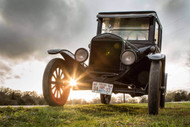
1908: The Model T is released. Known as the "Tin Lizzie," the Model T was made to be affordable for everyone and easy to maintain. The vehicle sold so well the company had difficulty producing enough to meet the high demand. It would ultimately become one of the best-selling cars of all time.
1913: Ford becomes the first company to use an assembly line for automotive production. This revolutionary process allowed the manufacturer to produce the Model T significantly faster to meet demand.
1914: To reduce staff turnover, Ford cuts the 9-hour work day to 8 hours and begins to pay workers $5 daily, more than double the normal pay.
1914: The first full-service industrial motion picture firm, the Photographic Department, is formed by Ford Motor Company to create motion pictures and still photographs. It releases its first film during the summer of the same year, called How Henry Ford Makes One Thousand Cars a Day.
1917: The Ford Model TT is produced. It is the manufacturer's first pickup truck.
1918: The manufacturing of Eagle-class antisubmarine patrol boats begins at the River Rouge Complex.
1925: Ford builds the first of his multi-engine, all-metal Tri-Motor airplanes, which would become the first airplanes used by commercial airlines. The planes are given the nickname "Tin Goose."
1927: In efforts to open rubber plantations as a source of rubber for the Ford Motor Company, Ford buys land in Brazil. This would later become the industrial town known as Fordlandia.
1927: Ford's River Rouge Complex begins producing entirely finished cars. The vehicles produced at this factory were built from the ground up using raw materials owned by the Ford Motor Company.
December 1927: The new Ford Model A is released to the public.
1928: The Ford Model T is discontinued after having sold more than 15 million vehicles.
1933: Ford opens the Edison Institute, which would later become known as the Henry Ford Museum.
1937: The Battle of the Overpass occurs at the River Rouge Complex. The incident occurs when Ford security attacks United Auto Workers members who, with city permit in hand, are passing out leaflets in an effort to unionize Ford's workers.
1941: After declaring in April that he would rather close factories than answer union demands for higher pay, Ford agrees in July to give workers some of the highest wages in the industry, plus a union shop. Also this year, Ford begins making jeeps for the military along with Willys-Overland.
1943: Stomach cancer claims the life of Ford's son.
1945: During a trip to Richmond early in the year, Ford has a stroke, which affects him both mentally and physically. Later that year, his grandson, Henry Ford II, sells Fordlandia.
1947: At the age of 83, Henry Ford dies at his estate.
Henry Ford's legacy extends far beyond the assembly line—he fundamentally changed how Americans view vehicle ownership. What was once a luxury for the elite became an attainable milestone for working families, tradespeople, and entrepreneurs. That same spirit of practical innovation lives on today among truck and SUV owners who treat their vehicles as both tools and investments. For those who haul equipment, chase outdoor adventures, or simply rely on their ride daily, protecting the interior with custom car seat covers honors Ford's original vision of vehicles built to work hard and last.
FAQs
1. Why is Henry Ford considered so influential in automotive history?
Ford didn't invent the automobile, but he revolutionized how they were made and who could afford them. His assembly line process dramatically reduced production costs and time, making car ownership possible for average working families rather than just the wealthy. This democratization of transportation reshaped American culture, commerce, and geography in ways still visible today.
2. What made the Model T so popular?
The Model T combined affordability, durability, and ease of maintenance—qualities that resonated with practical buyers. Ford designed it specifically for everyday people who needed reliable transportation without excessive complexity. Its rugged construction handled rough roads, and replacement parts were widely available, making it the sensible choice for farmers, tradespeople, and families alike.
3. How did Ford's assembly line change manufacturing?
Before Ford's innovation, skilled craftsmen built vehicles individually from start to finish—a slow and expensive process. The moving assembly line broke production into simple, repetitive tasks, allowing workers to specialize and dramatically increasing output. This method spread beyond automobiles to virtually every industry, fundamentally transforming modern manufacturing.
4. What was the significance of Ford's first pickup truck?
The Ford Model TT marked the beginning of America's enduring love affair with pickup trucks. It gave farmers, contractors, and small business owners a versatile workhorse capable of hauling goods and equipment. That legacy continues today, with trucks remaining essential for tradespeople and outdoor enthusiasts who depend on durable truck seat covers to protect their hardworking interiors from jobsite wear and adventure-related mess.
5. How did Ford impact worker wages and conditions?
Ford shocked the industry by significantly raising wages and reducing work hours, which decreased turnover and attracted skilled workers. This approach recognized that well-compensated employees made better products and could themselves become customers. His policies influenced labor practices across industries and contributed to the growth of America's middle class.