




Key Takeaways
- Chevy trucks come in four primary cab sizes (Regular, Extended, Double, and Crew), and the cab is often a strong hint about the trim level the truck carries.
- Each Chevy truck model (Colorado, Silverado, Avalanche) offers its own ladder of trim levels, with overlap on common names like LT and LTZ.
- Silverado weight class numbers (1500, 2500HD, 3500, 4500, 5500) signal payload and towing capacity, with HD models built for heavy work.
- Modern Chevy trucks include side curtain airbags, driver and passenger airbags, and seatbelt mechanics that work in tandem with airbag deployment, so seat covers must be airbag-compatible.
- ShearComfort builds custom-made seat covers cut for your exact year, make, model, cab size, and trim level, with a Perfect Fit Guarantee on every order.
Chevy truck cab sizes shape almost every decision you make about a Chevrolet truck: how many passengers fit, how much storage sits behind the seats, the trim level the truck carries, and even the seat covers that fit cleanly over the original upholstery. Chevrolet trucks have been on the road for decades, with popular models like the Colorado, Silverado, and Avalanche each pairing different cab sizes against different trim levels. ShearComfort factors all of these variables into every order so the seat covers you receive are cut for the truck you actually drive.
Read on for a clear breakdown of the four main Chevy cab configurations, the trim ladders across the Colorado, Silverado, and Avalanche, what the 1500-through-5500 weight class numbers really mean, and how cab and trim affect the seat covers for Chevy trucks you might want to buy. Whether you're shopping for a truck or refreshing the interior of the truck already in your driveway, this Cab Size Guide gives you the context to choose with confidence.

Chevy Truck Cab Sizes: The Four Main Configurations
There are four primary cab sizes used across the Chevy truck lineup. Each cab offers a different mix of passenger capacity, seating arrangement, and cargo space, and not every model offers every option. The cab size is often indicative of the trim level, with higher trim levels tending toward Double and Crew cab designs while work-focused builds lean on Regular and Extended cabs.
Regular Cab
A Regular Cab, also called a Standard Cab or Single Cab, offers a more traditional pickup look with just two doors and a single row of seats. Passenger capacity is usually three people, depending on the seat type and overall cab design. There is often little to no cargo space behind the seats of a Regular Cab, which keeps the overall truck length manageable while leaving more room for the cargo box. Regular Cabs pair naturally with Long Bed configurations for drivers who prioritize hauling room over rear-row passengers.
Extended Cab
An Extended Cab has four doors, but the rear doors feature a rear-hinge that opens backward, similar to suicide doors on classic vehicles. The rear doors only open after the adjacent front door is open, and the back-row seating arrangement offers either half seats or an additional storage area rather than full passenger seating. Extended Cab suits drivers who occasionally carry rear passengers but mostly prioritize cargo behind the front row.
Double Cab
Double Cabs are sometimes called the sedans of the truck world. Four full-size doors open like conventional car doors, the rear doors are smaller than the front ones, and the second-row interior dimensions are tighter for taller adults on long drives. Double Cab is a popular middle-ground size because it offers a decent amount of interior space while the shorter rear doors keep the overall length of the pickup reasonable.
Crew Cab
A Crew Cab looks almost identical to a Double Cab, except there is more legroom for passengers in the back row. The rear doors are also significantly larger than those on a Double Cab. Crew Cabs offer the same passenger capacity as Double Cabs and are often confused with them, but the extra rear-row room makes Crew Cab the right pick when adult passengers ride in the back regularly. Crew Cab configurations often pair with Short Bed and regular bed pickup trucks to balance back-row legroom against truck bed styles, with the choice affecting Cargo Box Length, Cargo Box Width, and overall Cargo Volume. Crew Cab pairs naturally with custom-made seat covers cut for the larger rear bench or the second-row split bench configurations common on premium trims.
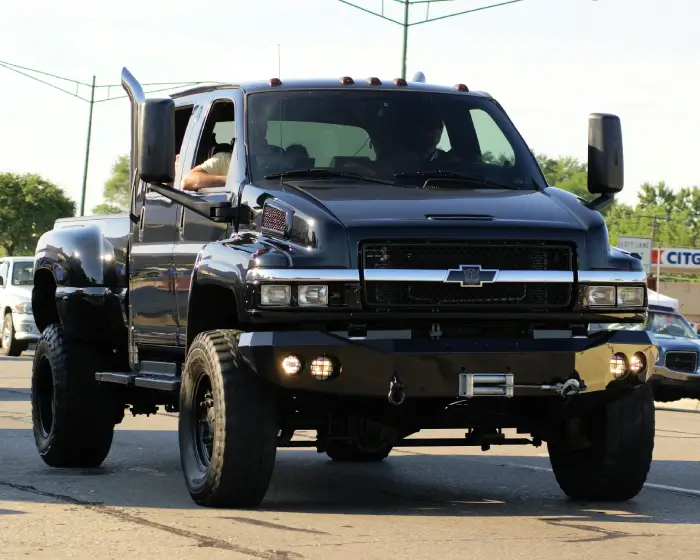
Chevy Truck Cab Sizes Vary by Model and Trim Level
Each Chevy truck model offers its own ladder of trim levels, with some overlap on names like LT and LTZ across models. The trim level affects which cab sizes are available, what powertrain options open up, and which interior features come standard. Below is a model-by-model breakdown of the Colorado, Silverado, and Avalanche.
Chevrolet Colorado
The Chevrolet Colorado is a midsize pickup truck with full-size capabilities. Introduced in 2004 to replace the S-10, the Colorado competes against industry benchmarks in the midsize class. The first generation of the Colorado featured three trim levels (Base, LS, and LT), and the current generation expands to Base, WT, LT, Z71, and ZR2.
- Base: Standard, baseline configuration
- WT: Work Truck, focused on utility and durability
- LT: Mid-tier trim and the most common Colorado configuration
- Z71: Premium-tier trim that includes off-road equipment such as skid plates, upgraded suspension, and additional ground clearance
- ZR2: Off-road performance halo trim with trail-tuned hardware that holds its own against aftermarket lift kits
Chevrolet Silverado
The Chevrolet Silverado is the successor to the manufacturer's C/K model, offering full-size pickup trucks, chassis cab trucks, and medium-duty trucks. The Silverado nameplate first appeared in 1975 as the highest-tier trim for the C/K truck line, and the first-generation standalone Silverado entered production in 1998. The current Silverado trim ladder includes WT, Custom, Custom Trail Boss, LT, RST, LT Trail Boss, LTZ, High Country, RST Off-Road, and RST Street.
The trim levels include a next-generation touchscreen infotainment system with Apple CarPlay and Android Auto, Bluetooth, power windows, power door locks, air conditioning, and a backup camera. There have been several Special Editions released over the years, including the Realtree Edition. This special edition pairs naturally with ShearComfort's Realtree Camo seat covers, which are cut from exact patterns for the Silverado's bucket and split bench configurations.
Chevrolet Avalanche
The Chevrolet Avalanche was a full-size truck that seated five or six passengers. Chevy manufactured the Avalanche from 2001 to 2013 on a model architecture that combined SUV cabin features with pickup utility, and many of these trucks remain on the road today. Available trim levels included LS, LT, and LTZ, plus several Special Editions and packages released as complements to the main lineup.
- LS: The base Avalanche trim
- LT: The mid-tier trim, which introduced bucket seating up front
- LTZ: The premium-tier Avalanche, which included a Bose CenterPoint amplified sound system and a 6-disc CD changer
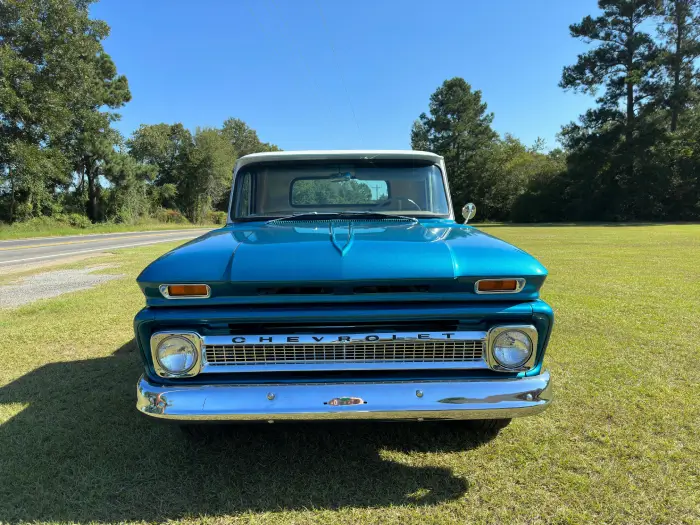
The Difference Between 1500, 2500, 3500, 4500, and 5500
The Chevy Silverado lineup uses numeric badges (1500, 2500, 3500, 4500, and 5500) that signal weight class and intended use. Originally, 1500 meant a half-ton, 2500 meant a three-quarter ton, and 3500 meant a one-ton truck. The convention has shifted, and today the lineup splits into light-duty and heavy-duty categories.
- Silverado 1500: Considered a light-duty truck, the 1500 features a capable V8 engine with plenty of amenities across the trim ladder. Common Powertrain Engine options include the Vortec 6000 V8 and the Duramax 3.0-liter turbo-diesel I-6.
- Silverado 2500HD: A heavy-duty truck powered by the Duramax 6.6 L V8, offering up to 910 lb-ft of torque and a towing capacity of 35,000 lbs when paired with the Max Trailering Package.
- Silverado 3500HD: Shares the Duramax 6.6 L V8 powertrain with the 2500HD and adds higher max payload, designed for fleet work and heavier hauling.
- Silverado 4500 and 5500: Medium-duty classes built for the toughest jobs, often spec'd by businesses for chassis cab applications.
The toughest Chevy trucks deserve durable seat protection. Heavy-duty interiors that face tools, mud, and daily wear pair perfectly with Waterproof CORDURA® seat covers. These seat covers are 100% waterproof, abrasion-resistant, and built to stand up to the biggest tasks. Whether you drive a Colorado, a Silverado, or an Avalanche, ShearComfort has been the trusted name for owners of these reliable trucks since 1983, with seat covers made to handle whatever the day throws at them.
Safety Features Standard Across Chevy Trucks
In 1995, Chevrolet began installing airbags on the driver's side of its trucks. Passenger-side airbags followed in 1997, and the modern Chevy truck lineup adds side curtain airbags as standard equipment. The seatbelt mechanics work in tandem with the airbag system during a collision, so any seat cover fitted over the original upholstery has to respect the airbag deployment path.
Safety is a priority across the Chevy truck line, with stability control, traction control, and reverse cameras now standard on most current trim levels. ShearComfort builds every cover set with airbag-compatible alterations so all factory safety features remain fully functional, including side curtain airbag deployment paths. The Perfect Fit Guarantee covers proper fitment around airbag seams, headrests, armrests, and seat controls.
Matching Seat Covers to Your Chevy Truck
If you drive a Chevy truck, chances are it means something to you. Matching the right seat cover to your specific cab size, trim level, and use case keeps the interior looking factory-fresh for years. ShearComfort offers fully custom-fitted seat covers based on your truck's exact schematics, with material options that suit every driver.
NeoSupreme seat covers are the most popular pick across the lineup. They offer the widest range of everyday use and come in over 18 color combinations, so you can coordinate the covers with your truck and your style. NeoSupreme is water-resistant, sporty, and ideal for daily driving, family use, and the 60/40 or 40/20/40 split bench configurations common on Silverado work and mid-tier trims.
Beyond NeoSupreme and Waterproof CORDURA®, ShearComfort offers Neoprene (fully waterproof, suited to light pet use and daily travel), Sof-Touch Leatherette (a premium look that resists abrasion and water, a refined match for High Country and LTZ trims), Sheepskin (Australian Merino wool for year-round comfort with pressure relief on long drives), and a full range of camo prints including Realtree, Kryptek®, Mossy Oak, and Moonshine.
Talk to a ShearComfort Product Specialist Today
Before your next test drive or your next seat cover order, talk to one of our Product Specialists. With more than 40 years of experience, 20,000+ reviews, and offices in the USA and Canada, we can match the right material and configuration to your exact Chevy cab size and trim level. Every order is backed by our Perfect Fit Guarantee and a 2-Year Warranty, so you can refresh your interior with confidence.
Call us toll-free at 1-800-663-7750 or request a quote online to get started. Tell us your year, make, model, cab size, and seat configuration, and our team will walk you through the materials, colors, and accessories that fit your truck.
Frequently Asked Questions
What safety features are included in modern Chevrolet trucks?
Chevrolet trucks come with a range of safety features including driver-side and passenger-side airbags, side curtain airbags, and seatbelt mechanics that work in tandem with the airbag system during a collision. Most current Chevy trucks also include stability control, traction control, and reverse cameras as standard equipment. When ordering seat covers, look for airbag-compatible alterations so the cover does not interfere with side-impact airbag deployment, which is built into every ShearComfort order automatically.
What are the different cab sizes available for Chevy trucks?
The four primary Chevy truck cab sizes are Regular Cab, Extended Cab, Double Cab, and Crew Cab. Regular Cab has two doors and a single row, Extended Cab adds rear-hinged half-doors and limited back-row seating or storage, Double Cab has four full doors with smaller rear doors, and Crew Cab has four full doors with the largest back-row legroom. Each cab affects passenger capacity, cargo space behind the seats, and which trim levels are available on your truck.
How do the trim levels of the Chevrolet Colorado differ?
The Chevrolet Colorado offers Base, WT, LT, Z71, and ZR2 trim levels in its current generation. Base and WT are entry-level configurations focused on utility and value. LT is the mid-tier trim with comfort and convenience features, and is the most common Colorado on the road. Z71 adds off-road equipment like skid plates and upgraded suspension. ZR2 is the off-road performance halo trim with trail-tuned hardware, including Multimatic DSSV dampers and CRAWL control on recent model years.
What distinguishes the Silverado 1500 from the 2500HD?
The Silverado 1500 is a light-duty truck designed for daily driving, with a capable V8 engine, broad trim ladder, and plenty of amenities aimed at personal use. The Silverado 2500HD is a heavy-duty truck built for towing, hauling, and work-site demands, capable of towing up to 35,000 lbs and producing up to 910 lb-ft of torque when paired with the appropriate trailering package. The 1500 suits most personal buyers, while the 2500HD targets fleets, contractors, and serious tow-vehicle owners.
Why should I invest in custom-fitted seat covers for my Chevy truck?
Custom-fitted seat covers offer protection and style cut to the specific model, trim level, and cab size of your Chevy truck. ShearComfort builds each set from exact patterns for your year, make, model, and seat configuration, including bucket seats, split benches, and 40/20/40 splits with a center console. Universal covers tend to bunch, gap around headrests, and interfere with side-impact airbag deployment, while custom covers protect your seats cleanly and keep every factory feature fully functional, all backed by the Perfect Fit Guarantee.